
Sketches to skyline, Daniel’s stadium story…
by Jen Marsh
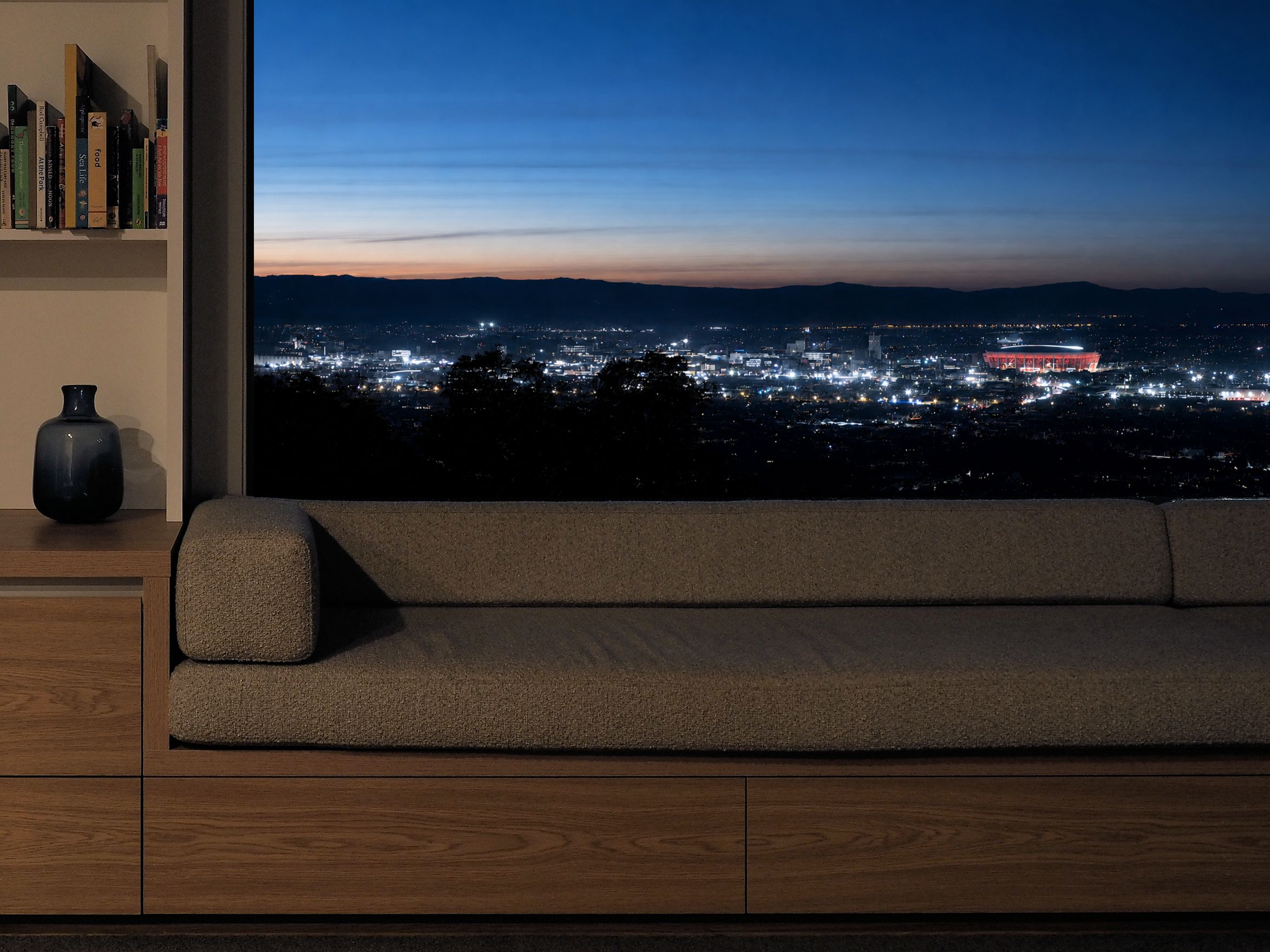
The Pocket team went along to the One NZ stadium in Christchurch for the sell out, Crusaders V Hurricanes game. We could all clearly see it was a very special visit for Daniel, so I sat down to chat with him more…
DANIEL: I spent the best part of 3 years working full time on the stadium before joining Pocket. It’s always very special to visit a completed project, but this was unlike anything else. I really care about my work and put a huge amount into it. So, to be able to come back years later and experience the stadium with my Pocket family and 25,000 other fans was just amazing. I was buzzing!
JEN: So, you were involved in the engineering of the new stadium before you joined Pocket, what was your main role?
D: During the design phase I was the West Stand lead. This essentially meant that I was responsible for the design of the structure which has all the function spaces, suites, media facilities and player facilities. As the project progressed, I became involved in the design of all the stands. There's not much in the bowl structure that I didn't have some involvement in.
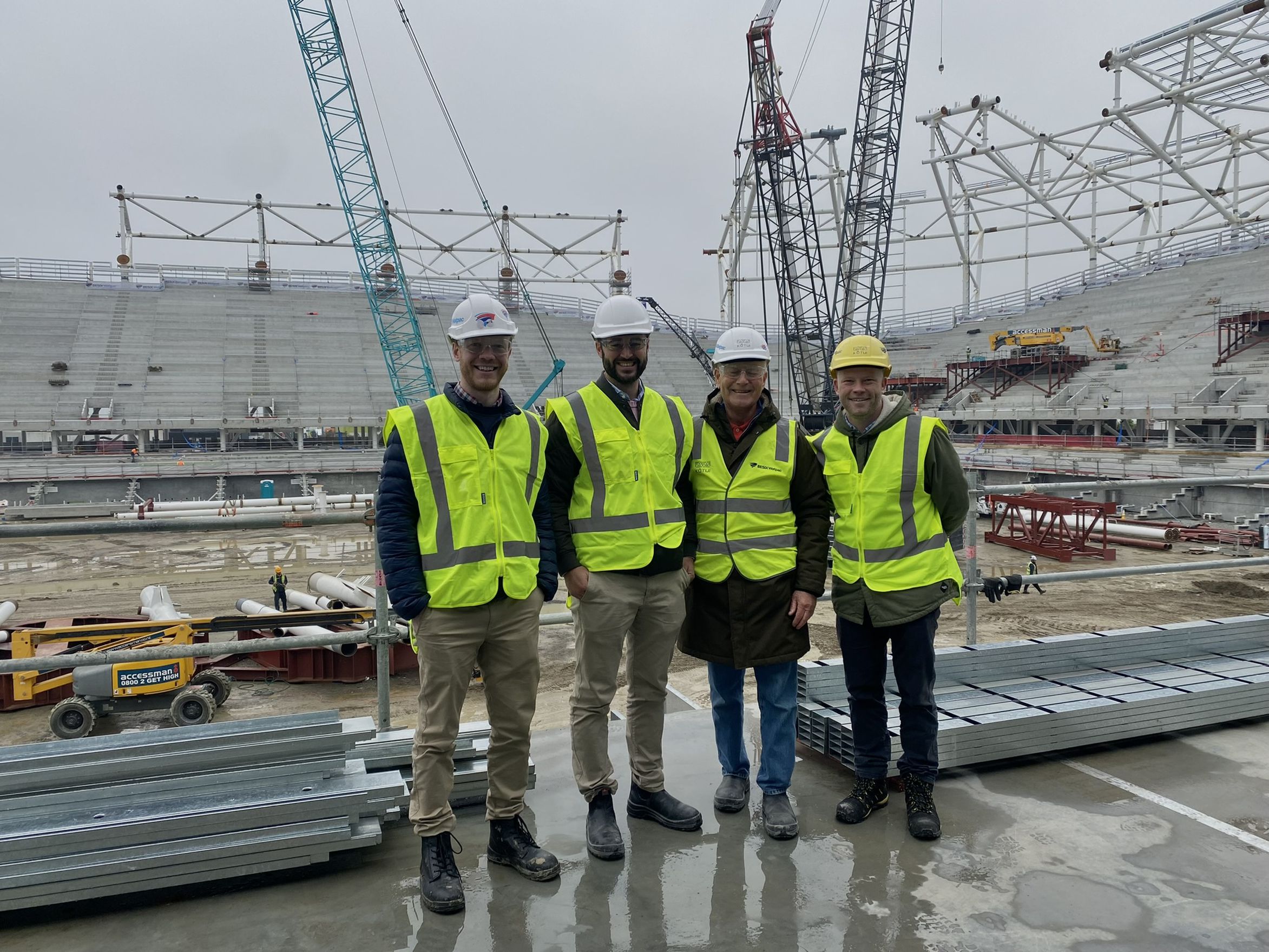
One NZ Stadium site visit with team Pocket August 2024
J: How do you even start on a project of that size? Do you follow the same process as any other project?
D: It’s not as different as you might think, there is just more. As with any project, you begin by thinking about all the challenges and constraints and what key decisions need to be made early in the design stage. This is the same at Pocket during our concept design.
One key design requirement for the stadium from the contractor, was to have a concrete structure below the concourse. This was because most of the steelwork was being fabricated overseas, and they couldn’t wait for the delivery. This resulted in a very different concept than if the whole thing could have been made with steel.
J: What were the biggest challenges for you?
D: The seismic design was a challenge. While this wasn't my first project in New Zealand, it turns out I didn't understand capacity design and ductility as much as I thought I did, which would be the case with most engineers in New Zealand. Throughout the process I learnt a huge amount and I’m really proud of the efficient design that we ended up with.
Also, the builder was under immense pressure to deliver on time, leading to several occasions where concrete was poured with a known issue, and we had to come up with solutions to retrofit remedial works. It was a lot of firefighting.
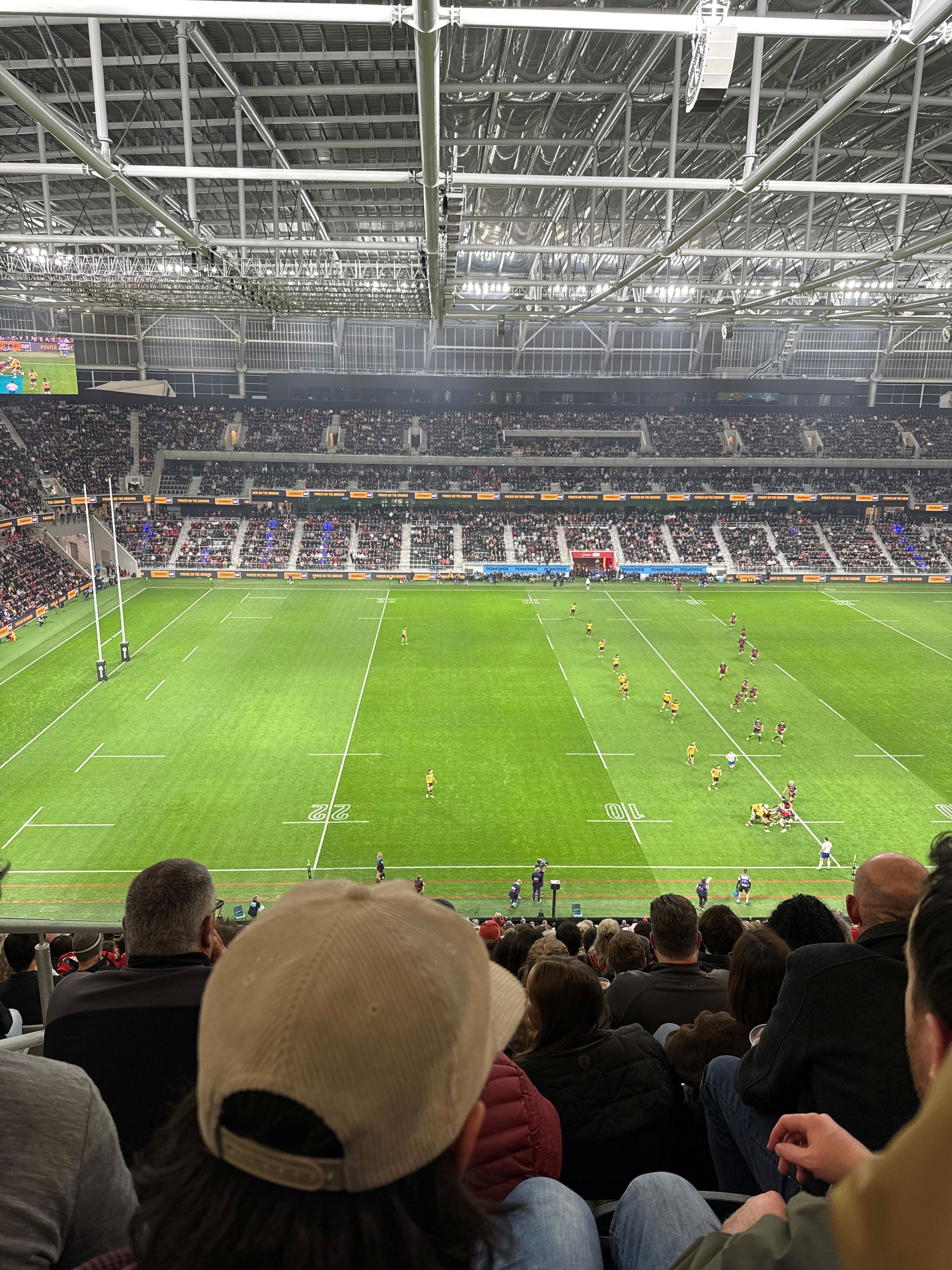
One NZ Stadium May 2026
J: How did it feel to be in the new stadium, seeing your thinking, designing and engineering solutions in reality?
D: This is always a fantastic feeling on any project. We work in this industry because we create real things that people get to enjoy. The structures we create will outlast us and there is an immense feeling of pride in that. The new stadium is a significant building for Christchurch, drawing people back into the city, helping it come alive again and it feels amazing to have been part of it.
J: Do you often get this feeling/experience as a structural engineer?
D: Genuinely every time I visit a completed project, I get excited, especially if it’s a public project. I still remember so strongly the feeling of pride I had the first time I stood on a structure that I had designed as a fresh-faced engineer (the Dreadnought building at the University of Greenwich).
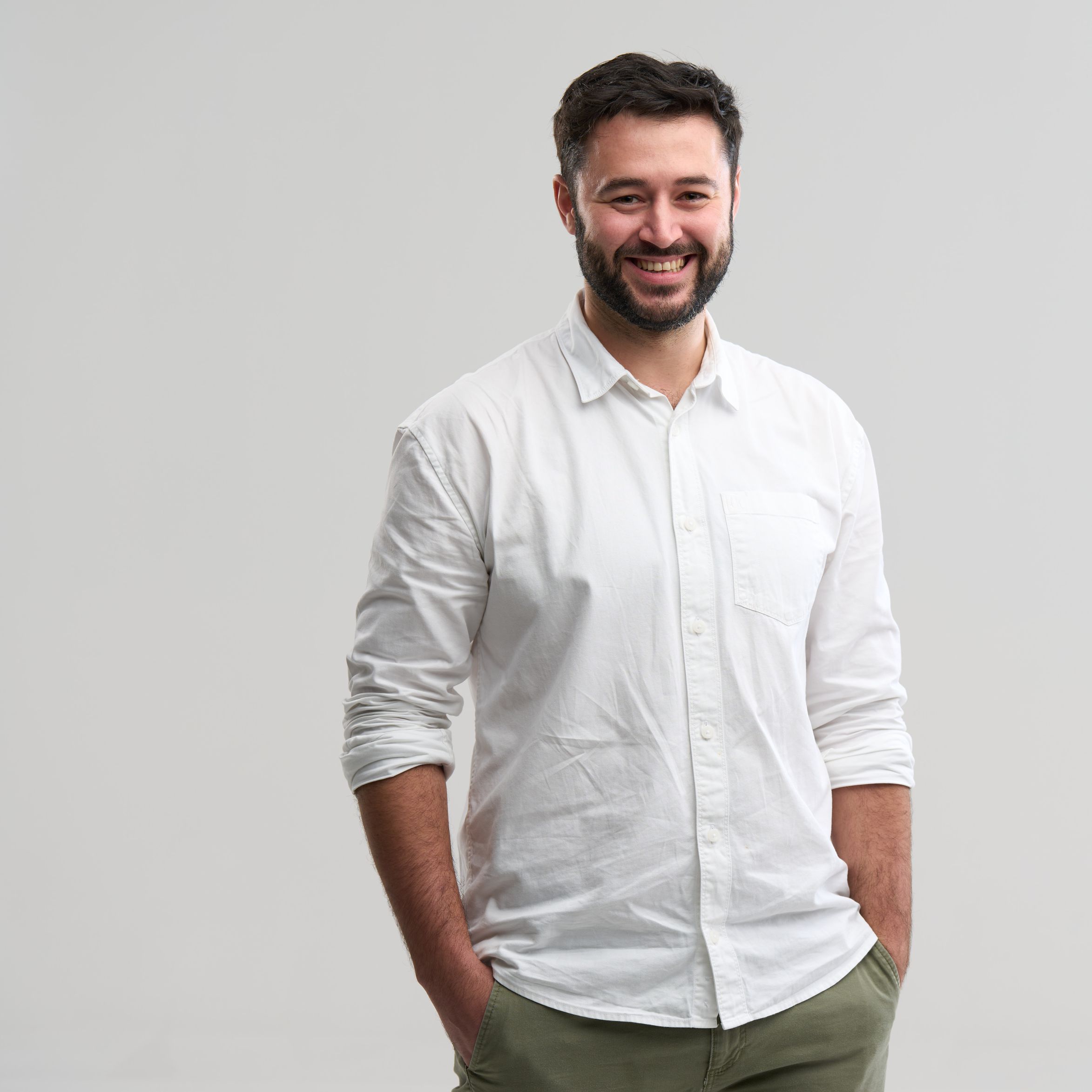
Daniel Jaffe, Senior Engineer at Pocket, Auckland
J: What have been the biggest contributing factors to make you the excellent engineer you are today?
D: Thank you for the lovely compliment. I know my Mum would contribute a lot to my Grandad, he was an engineer for the BBC and was involved with the outside broadcasts of the World Cup, Commonwealth Games, and the launch of Radio 1. But I was also incredibly lucky to begin my engineering career with a company that gave me a lot of responsibility and great support. Right from the start I was taught how to think, not just how to do analysis and this can often get missed for many graduates these days. Hand drawing was also a huge part of my graduate job, and is a skill that sits at the core of how we work at Pocket today. The act of sketching is thinking. I have an A1 drawing board on my desk, and I would encourage other engineers (of any experience) to practice thinking using drawing
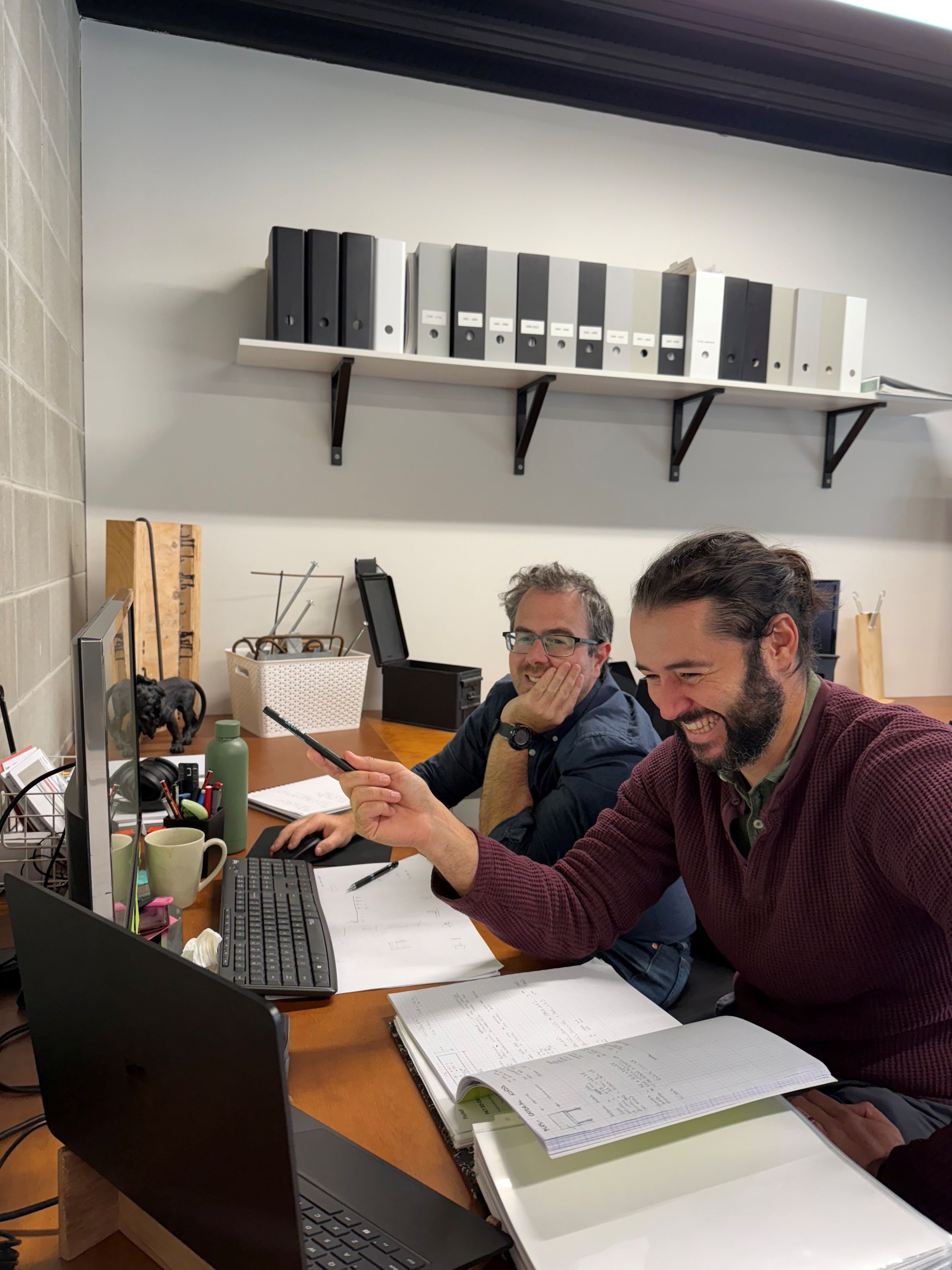
Dave and Daniel, Pocket studio, May 2026
J: What are you currently working on at Pocket and how do you feel about it?
D: Where do I start? There are currently some exciting projects on my desk. We are getting towards the end of construction on a project in Grey Lynn, where we are converting a 1980's blockwork warehouse into a CLT and steel frame office. We are designing a new driving range in Wainui, and we have countless new build and alteration projects at all design stages happening right now - I’m also just finishing my own home renovation, which has been an interesting experience. I love working on such a variety of projects with talented architects.
J: How does your experience from the stadium influence the way you approach a design at Pocket?
D: You never stop learning as an engineer; being part of the of the stadium project helped me consider in more detail how complex structures are built, which has improved my thinking in the early design stages to find the best solutions for the project as a whole. The stadium design process has also given me huge confidence in my seismic design ability, and I now approach all my concepts with more creativity which I know improves the overall quality of the building, leads to a simpler construction process and ultimately saves money.